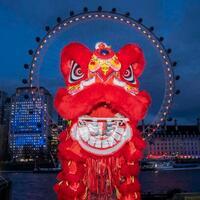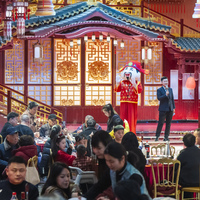


BEIJING, China: As China heads into the Lunar New Year holiday from February 15, domestic artificial intelligence firms are racing to unveil new models, aiming to capitalise on the festive spotlight one year after DeepSeek shook the industry.
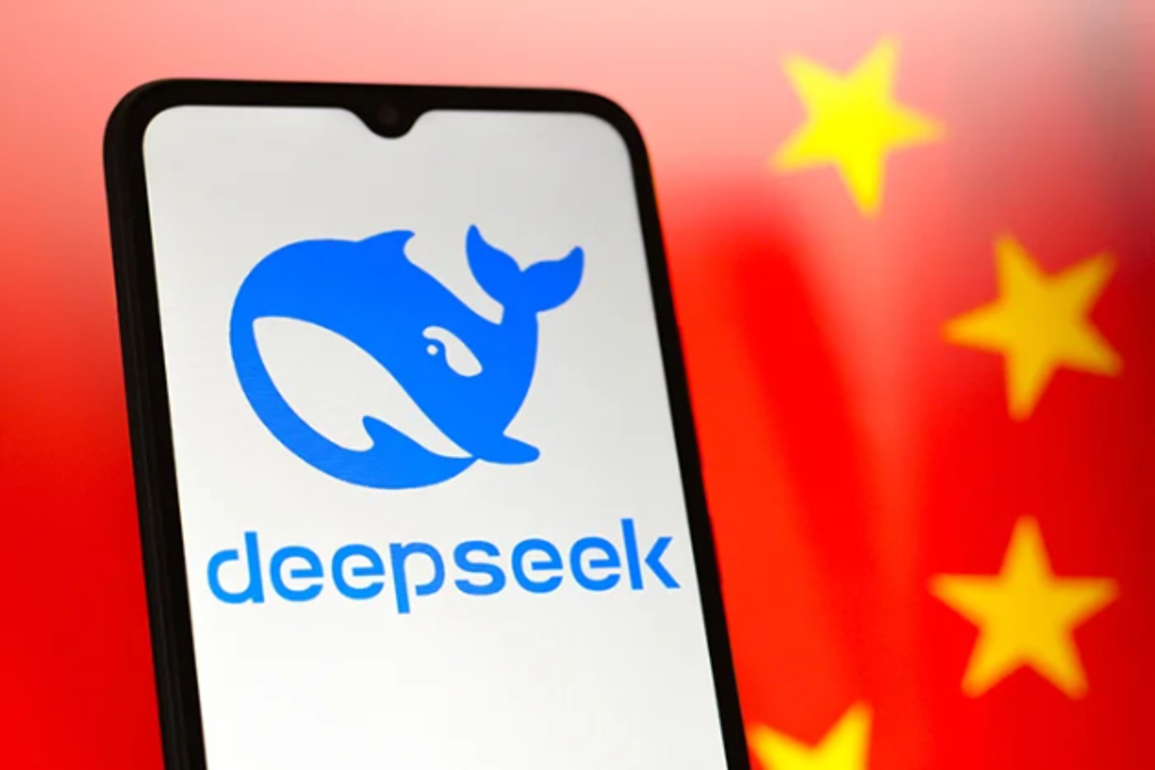
DeepSeek's surprise debut of its R1 and V3 models during last year's Spring Festival caught rivals off guard and transformed China's AI landscape. With the Hangzhou-based startup expected to release its next-generation V4 model soon, according to tech news site The Information, competitors are rolling out upgrades of their own to avoid being overshadowed again.
Below are key players launching or preparing new models during the holiday period:
Deepseek
DeepSeek's anticipated V4 would replace last year's V3, which powered an assistant app that briefly overtook ChatGPT as the top-rated free app on Apple's U.S. App Store. Investors are also watching for R2, successor to R1.
This week, DeepSeek boosted expectations by expanding its chatbot's "context window" — the amount of data it can process in a single task — from 128,000 to 1 million tokens. The upgrade allows the chatbot to handle book-length text in response to one prompt.
Bytedance
ByteDance, owner of TikTok, released Doubao 2.0 on February 14. The company said the chatbot can perform deep reasoning and long, multi-step tasks comparable to those of OpenAI's GPT-5.2 and Google's Gemini 3 Pro.
Doubao is China's most popular AI chatbot by weekly active users, according to Quest Mobile's December data.
The company also launched Seedance 2.0, a video-generation model that has drawn comparisons to DeepSeek's rise and gained attention on Chinese social media and X, including from Elon Musk. Seedance 2.0 generates cinematic videos from minimal prompts. ByteDance followed with the picture-generation model Seedream 5.0 Lite on Friday.
Alibaba
Alibaba, which responded quickly to DeepSeek's ascent last year with Qwen 2.5-Max, is preparing Qwen 3.5.
The company's Qwen app has seen increased domestic use after Alibaba spent three billion yuan (US$400 million) on a coupon campaign promoting "agentic commerce," where AI manages online shopping. The campaign drove more than 120 million consumer orders in six days, Alibaba said.
Zhipu and Minimax
Zhipu AI released its open-source GLM-5 model on February 11, highlighting improved coding and long-running agent tasks. Zhipu, recently listed in Hong Kong, plans a secondary listing in Shanghai.
Rival MiniMax launched its open-source M2.5 model and raised HK$4.8 billion in its Hong Kong listing. The company has developed apps, including Hailuo AI and Talkie.
Others
Tencent introduced HY-1.8B-2Bit, a compressed model designed for consumer hardware. iFlytek unveiled Spark X2, trained entirely on Chinese-made chips. NetEase Youdao launched LobsterAI, a desktop assistant agent, while Dexmal introduced DM0, an AI model tailored for robotics.
Together, the launches underscore China's intensifying AI competition one year after DeepSeek's disruptive debut.