

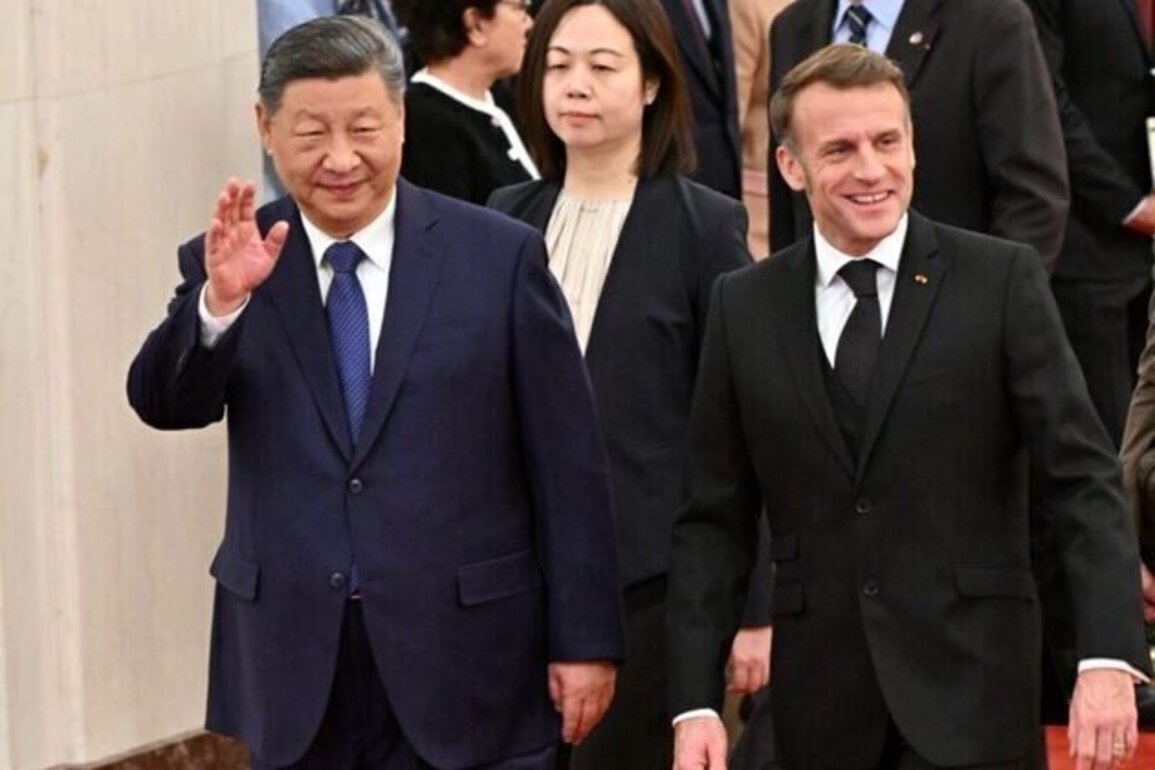
PARIS (CN) - On the second day of French President Emmanuel Macron's state visit, unanswered questions on China's support for Russia, Macron's position on Taiwan and the rebalancing of trade relations are looming over red carpets and firm handshakes.
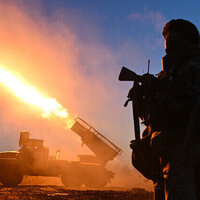
On Thursday morning in Beijing, Macron discussed Russia's war on Ukraine at length with Chinese President Xi Jinping, emphasizing its threat to European security and general international order. Jinping and Russian President Vladimir Putin have met over 40 times since 2012, and China remains a key buyer of Russian goods that are widely sanctioned in the West.
"The EU officially considers China as a key enabler of Russia's war on Ukraine," Zoltan Feher, a nonresident fellow at the Atlantic Council who frequently publishes reports on EU-China relations, said. "Because China doesn't condemn the war, and also provides practical support by buying Russian gas and oil and providing goods and weapons."
Macron presented the war as a crisis that risks the "disintegration of the international order" that has brought peace to the world for decades, calling the dialogue between France and China "more essential than ever." He acknowledged the two nations' disagreements and made a plea to overcome them in the interest of multilateralism.
While Xi said China always has an interest in peace, he added, "We reject all irresponsible and accusatory accusations" during a news briefing, cooling some of Macron's optimism.
Yang Li, the executive director of the Institute for China-Europe Studies think tank, doesn't think a single state visit can resolve differences on the war.
"For those security-related issues, especially on Ukraine, I don't think that there will be any major breakthroughs because China is not a direct party in the conflict," he said. "France wants China to play a certain role in pressing Russia to get into a ceasefire immediately, but right now, the United States is mediating and also it has made certain progress ... . But China is pleased to see that progress."
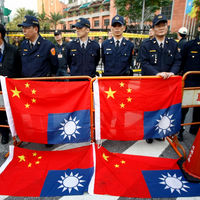
On the flip side, Xi is expected to urge Macron and the EU to back away from Taiwan. China claims the island is part of its territory and has spoken of using force if necessary to annex it - what China calls "reunification."
"China thinks that how to resolve the Taiwan issue is a domestic affair, and China hopes that the international community, including France, could uphold that principle," Li said. "But the strategic communication between the top leaders on both sides could play some stabilizing role."
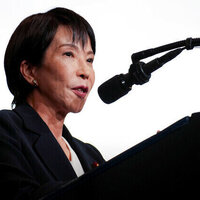
The issue flared up in recent weeks following comments made by Japanese Prime Minister Sanae Takaichi, who suggested her nation might intervene militarily if China invades Taiwan.
China responded by banning Japanese seafood imports and cancelling flights between the two nations. It also sent a letter to the United Nations making a case that Takaichi violated international law.
In 2023 during a previous visit, Macron won praise when he said that Taiwan was not a European problem, but one between the U.S. and China. He added that it wasn't in the European interest to be dragged into the conflict. Now, Macron has to tread lightly; Japan is a key ally for France.
"Macron might phrase it in a very diplomatic way, but he's not going to backstab Japan, which is a key security partner," Feher explained. "They also held consultations before this visit when France and Japan agreed to strengthen their security cooperation, so that's not going to go anywhere."
So far, the most concrete outcome of the state visit has been the 12 agreements signed Thursday. France and China agreed to boost their cooperation in higher education and research, and collaborate on panda conservation efforts.
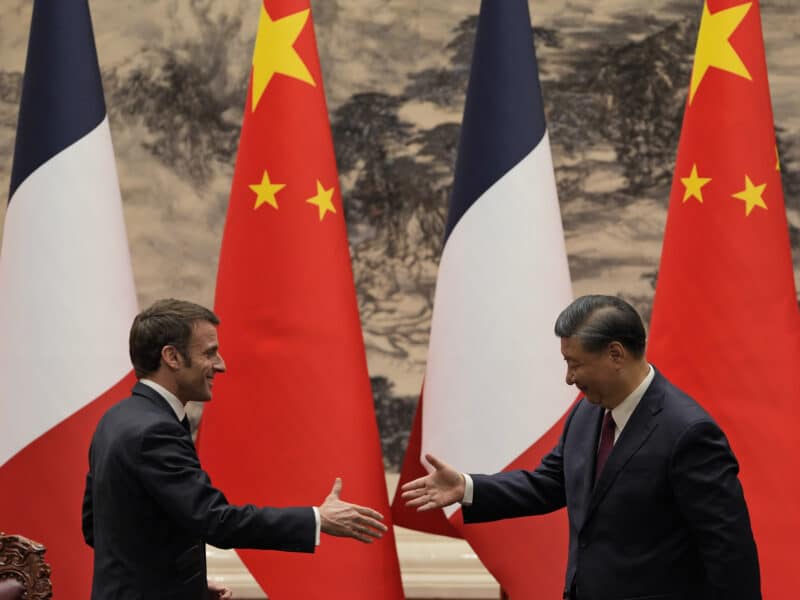
But there have yet to be concrete advancements on trade issues - one of the visit's major pain-points. Xi said the nations agreed to work towards greater economic cooperation in aerospace, aeronautics, nuclear energy and new areas like AI and green industries.
"I think they could reach some agreements on business and investment cooperation, or maybe on the energy or food sectors and other business-related issues," Li said. "But again, there are concerns from both sides regarding trade imbalances, and also the EU's counter-duties on China-made EVs and China's investigation into EU pork and dairy products."
Source: Courthouse News Service